Aluminum Protection – Comparing Type I vs. Type II/III for Design Engineers
When you are designing aluminum components that need to hold up against corrosion, wear or repeated stress, the anodizing specification you select has a direct effect on performance. Type I, Type II and Type III each produce different surface characteristics. Choosing the wrong one can lead to premature part failure or unnecessary expense. Let me walk you through what we have learned over years of working with design engineers on these exact decisions.
Type I: Chromic Acid Anodizing
Type I anodizing uses chromic acid to produce a thin coating, typically 1.5 to 2 micrometers thick. This is the thinnest of the three main anodizing types and that thinness makes it useful for specific situations.
Because the coating is thin, it preserves tight dimensional tolerances and has minimal effect on the fatigue resistance of the aluminum substrate. That is why Type I has been used in the aircraft industry for decades. Maintaining structural integrity under cyclic loading matters in that field and the thin coating keeps the base material’s fatigue properties intact.
The microstructure of Type I is dense and disordered rather than the columnar structure you see in Type II and Type III. The chromate ions in the electrolyte don’t facilitate charge transfer along the oxide surface the same way sulfate ions do, so the coating grows differently. While thin, Type I offers corrosion protection comparable to thicker sulfuric acid anodize when sealed properly. Type I is still a viable option if you need corrosion resistance but can’t tolerate dimensional changes.
One consideration is environmental. Chromic acid contains hexavalent chromium, which falls under regulatory restrictions. Some manufacturers are looking at dilute sulfuric acid processes as alternatives for applications that need thin coatings with good throwing power.
Type II: Sulfuric Acid Anodizing
Type II is the conventional anodizing process using sulfuric acid. It produces a thicker coating than Type I (typically 20 to 25 micrometers) with a characteristic columnar structure. That structure consists of hexagonal columns with cylindrical nanopores all composed primarily of disordered hydrated aluminum oxide.
The thicker coating provides better abrasion resistance than Type I. Taber abrasion testing shows Type II has a wear index around 6.70 mg per 1000 cycles. But the real advantage of Type II is corrosion resistance. Studies comparing Type I and Type II on various aluminum alloys found that Type II provides superior corrosion protection overall, particularly when the coating is sealed correctly.
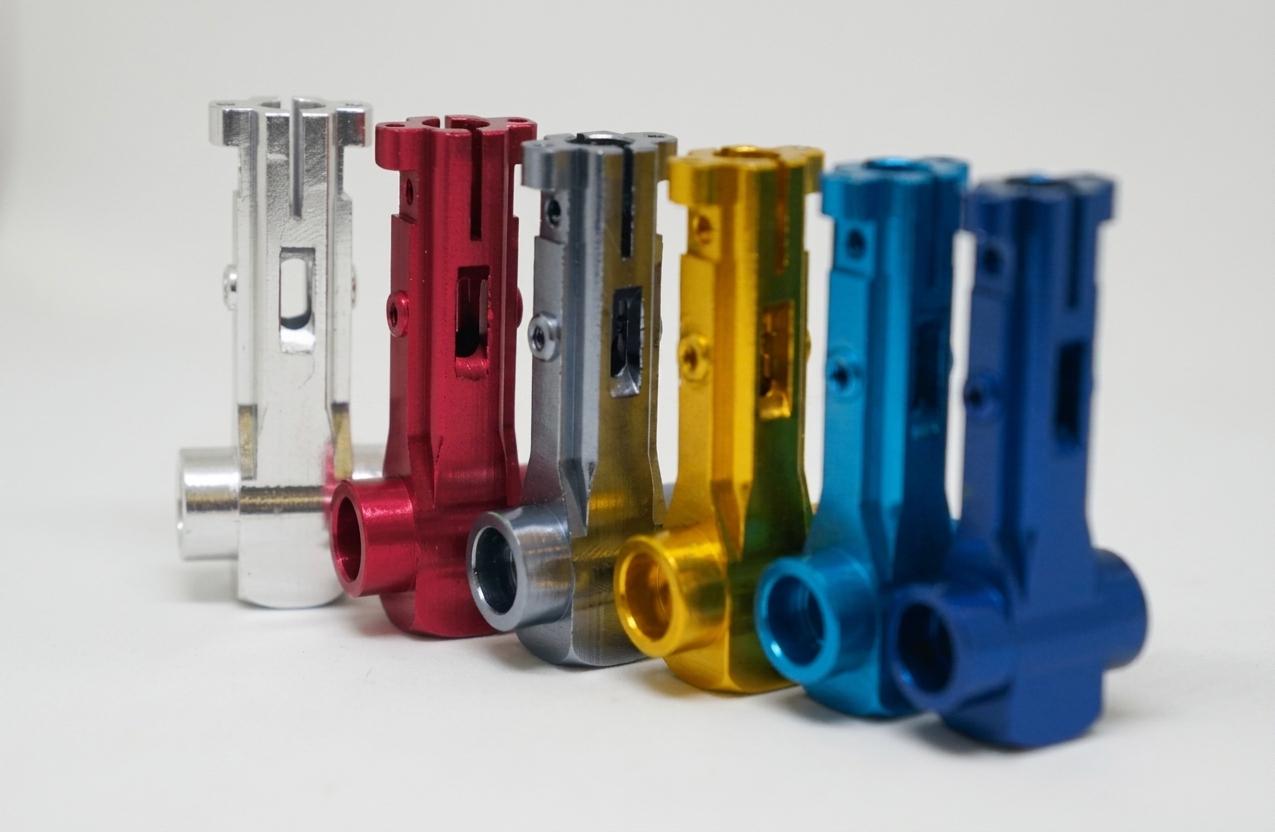
Type II is the most common anodizing specification for consumer goods, architectural components and many aerospace applications where decorative and protective qualities matter. The porous structure accepts dyes well, which is why you see Type II anodizing on so many colored aluminum products.
Type III: Hardcoat Anodizing
Type III (or hardcoat anodizing) also uses a sulfuric acid electrolyte but with different process parameters that create a thicker and denser coating. Type III coatings typically range from 25 to 50 micrometers thick, with coarser column walls and larger pores than Type II.
That thicker structure gives Type III superior wear resistance. Taber abrasion testing shows a wear index of only 1.56 mg per 1000 cycles for Type III. That makes it the finish of choice for high-wear applications like aluminum pistons, hydraulic components and any part that will experience repeated mechanical contact.
There are trade-offs. The thicker coating adds measurable dimension to the part, which can affect fit and function. Fatigue resistance can also be impacted more than with Type I though careful process control minimizes that effect. Type III isn’t typically considered decorative, though it can be dyed to dark colors. The military uses Type III for durable parts that must withstand extreme temperatures and chemical exposure.
How We Guide Customers Through This Decision
When customers come to us with aluminum parts, we walk through a few key questions to determine the right anodizing type.
If maintaining fatigue resistance and tight tolerances is the priority, Type I may be the best choice. It preserves dimensional fidelity better than either Type II or Type III. That is why we still use it despite environmental considerations.
If the part needs good corrosion resistance along with some abrasion protection and appearance matters, Type II is the standard choice. It provides a strong barrier against moisture and chemicals, accepts dyes readily and the coating is thick enough to offer meaningful protection without excessive dimensional change.
If the part will experience wear, friction or mechanical contact, Type III is usually the answer. The thicker coating provides much better abrasion and wear resistance. We recommend this for moving parts or components that will be handled frequently.
Part geometry also affects the decision. Complex shapes with many small features can be harder to anodize evenly and the thicker the coating, the more this matters. Sharp edges and threads can see uneven coating thickness. That is why our team evaluates part geometry during the quoting process to identify potential issues before production starts.
Our NADCAP certification for chemical processing means every anodizing job meets rigorous industry standards. We serve aerospace, defense, firearms and medical equipment manufacturers, all industries where selecting the right aluminum protection affects product performance and safety directly. Contact us today to get started.